
Nintendo SNES
Also known as SNES, Super Nintendo
- Manufacturer
- Nintendo
- Type
- Home console
- Generation
- 4th generation
- Released (North America)
- Aug 23, 1991
- Released (Japan)
- Nov 21, 1990
- Released (Europe)
- Apr 11, 1992
- Launch price
- $199.99
- Discontinued
- 1999
- Units sold
- 49.10 million (with Super Famicom)
About the Nintendo SNES
The Super Nintendo arrived in North America in August 1991 with Super Mario World in the box, two years after the Sega Genesis. Its CPU was slower than the Genesis's, but it had a larger color palette, a much better sound chip and Mode 7, the background scaling trick behind F-Zero, Pilotwings and Super Mario Kart.
Its library holds up well: A Link to the Past, Super Metroid, Chrono Trigger, Final Fantasy III (VI), Donkey Kong Country, Secret of Mana, Yoshi's Island and EarthBound. Because people still want to play these, loose prices on the top RPGs are higher than on almost any other 16-bit console. EarthBound in its oversized box is a well-known example.
The SNES is also a frequent target for reproduction carts. Real carts have a specific label finish, a 3.8 mm security screw and a Nintendo-marked board, so it is worth looking before you buy an expensive RPG. Later SNS-101 "SNES Jr." consoles are smaller but are not compatible with every accessory.
Nintendo SNES games by the numbers
Loose prices across 765 priced games
Most valuable Nintendo SNES games
![Star Fox: Super Weekend [Not For Resale] cover art](https://images.igdb.com/igdb/image/upload/t_cover_big/cobxk8.jpg)

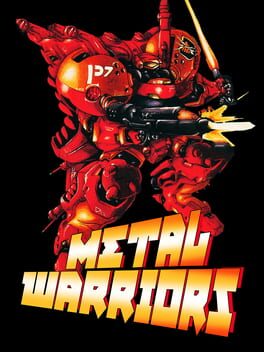
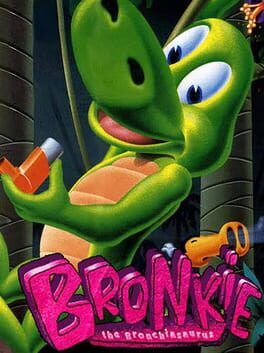

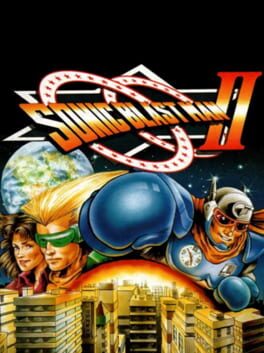
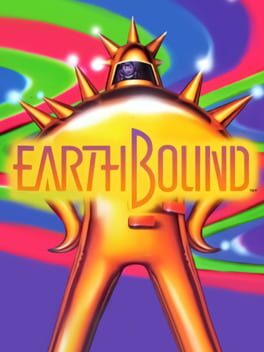

Most valuable sealed Nintendo SNES games
Top rated Nintendo SNES games
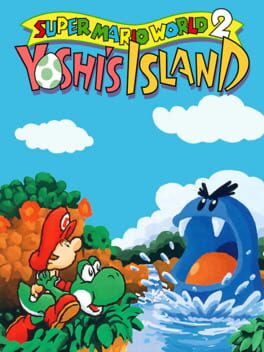
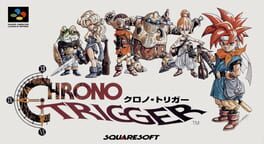

Most listed on eBay right now




Nintendo SNES games by release year
By each game's original release year, so ports count under the year the game first came out.
Hardware specs
| CPU | Ricoh 5A22 @ 3.58 MHz |
|---|---|
| Memory | 128 KB |
| Sound | Nintendo S-SMP 8 channels, stereo, 64 KB |
| Media | ROM cartridge |
| Resolutions | 256x224 to 512x448 |
| Video output | composite video, S-Video and RGB |
| Online | Satellaview (satellite radio), XBAND, |
Models & revisions
Super Nintendo (original European version)
Super Famicom Jr. (Model SHVC-101)
Redesign of the original Super Famicom AKA Super Famicom Junior AKA SFC Jr
- CPU
- Ricoh 5A22 @ 3.58 MHz
- Memory
- 128 KB
- Sound
- Nintendo S-SMP 8 channels, stereo, 64 KB
- Media
- ROM cartridge
- Resolutions
- 256x224 to 512x448
- Video output
- Composite video and stereo audio
New-Style Super NES (Model SNS-101)
A cost-reduced version of the console, referred to as the New-Style Super NES (model SNS-101) in North America and as the Super Famicom Jr. in Japan, was released late in the platform's lifespan; designed by Barr, it incorporates design elements from both the original North American and Japanese/European console models but in a smaller form factor. Unlike the original console models, the redesigned model is virtually identical across both regions save for the color palette.
Externally, the power and reset buttons were moved to the left-hand side of the console while the cartridge eject button and power LED indicator were omitted. Internally, the redesigned model consolidates the console's hardware into a system-on-chip (SoC) design. The redesigned console lacks the bottom expansion slot, rendering it incompatible with the Japan-exclusive Satellaview add-on.
- CPU
- Ricoh 5A22 @ 3.58 MHz
- Memory
- 128 KB
- Sound
- Nintendo S-SMP 8 channels, stereo, 64 KB
- Media
- ROM cartridge
- Resolutions
- 256x224 to 512x448
- Video output
- VGA
Super Nintendo (original North American version)
- CPU
- 16-bit 65c816 Ricoh 5A22 3.58MHz
- Graphics
- Nintendo S-SMP (8 stereo channels)
- Sound
- ROM cartridge
- Media
- Satellaview (Japan only), Nintendo Power (Japan only), XBAND
- Storage
- 128 kB
- Resolutions
- RF, composite, S-video, RGB
Console family
More Nintendo consoles








Game values from PriceCharting market data. Hardware specs and revisions from IGDB.