Nintendo NES
Also known as NES
- Manufacturer
- Nintendo
- Type
- Home console
- Generation
- 3rd generation
- Released (North America)
- Oct 18, 1985
- Released (Japan)
- Jul 15, 1983
- Released (Europe)
- Sep 1986
- Launch price
- $179.99 (Deluxe Set)
- Discontinued
- 1995
- Units sold
- 61.91 million (with Famicom)
About the Nintendo NES
The Nintendo Entertainment System is the North American and European version of the Famicom, which launched in Japan in 1983. Nintendo test-marketed it in New York in October 1985 with R.O.B. the robot and a front-loading "VCR" design so it wouldn't look like the consoles that had just crashed the market. It worked: by the end of the decade the NES was in roughly one in three American homes.
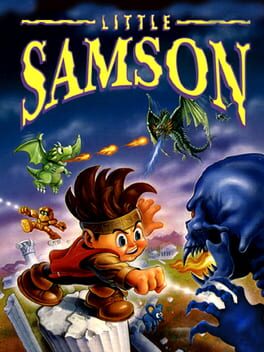
Super Mario Bros., The Legend of Zelda, Metroid, Mega Man 2, Castlevania and Punch-Out!! all started here, and they show up constantly loose. Values are driven by condition and completeness more than on any other console. A loose Super Mario Bros./Duck Hunt cart is cheap, but the same game sealed or graded can be a serious purchase. Late releases such as Little Samson, Bonk's Adventure and Panic Restaurant are scarce in any condition.
The NES is also the most counterfeited retro platform. Reproduction carts of high-value titles are common on eBay, so check the label, the screws and the board before paying collector money.
Nintendo NES games by the numbers
Loose prices across 856 priced games
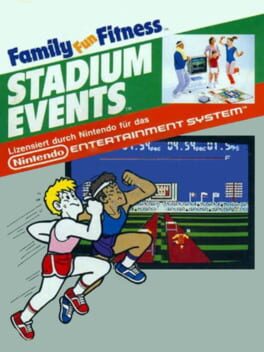
Most valuable Nintendo NES games
![Mega Man [5 Screw] cover art](https://images.igdb.com/igdb/image/upload/t_cover_big/co5x4b.jpg)





![Jaws [5 Screw] cover art](https://images.igdb.com/igdb/image/upload/t_cover_big/co4acp.jpg)
Most valuable sealed Nintendo NES games
Top rated Nintendo NES games

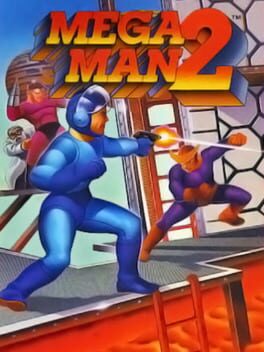

Most listed on eBay right now
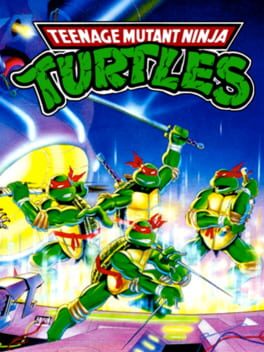



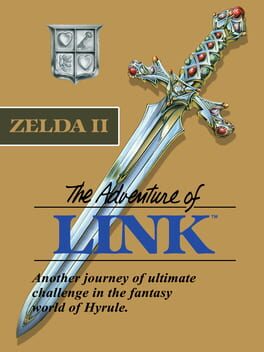

Nintendo NES games by release year
By each game's original release year, so ports count under the year the game first came out.
Hardware specs
| CPU | Ricoh 2A03 at 1.79 MHz |
|---|---|
| Graphics | Custom Ricoh Picture Processing Unit (PPU) |
| Memory | 2 KiB |
| Sound | CPU-integrated programmable sound generator (5 mono channels) |
| Media | Nintendo Entertainment System Game Pak |
| Resolutions | 256x240 |
| Video output | RF, composite |
| Online | Famicom Modem (Japan only) |
Models & revisions
New-Style NES
The New-Style NES is a compact, cost-reduced, redesigned version of the Famicom/NES released by Nintendo in 1993.
Redesigned by Lance Barr, the New-Style NES has a vertical cartridge slot to prevent reliability issues common with the spring-loaded mechanism in the original NES. The console removed the 10NES lockout chip, allowing it to play unlicensed games. The console also removed composite video output, leaving only RF output available on it; Nintendo later produced a rare version of the console that replaced RF with the AV "multi-out" port used on the SNES. Although a game was not bundled with the New-Style NES, it came packaged with a redesigned controller modeled after the SNES controller; colloquially called the "dog bone" controller due to its resemblance in shape to one, it also retailed separately for $15 ($30 in 2022 dollars) each.
- Media
- Cartridge
- Resolutions
- 256 x 240
Game Television
The Sharp Nintendo Television, often described as the C1 NES TV, is a CRT television with a built-in Famicom/NES that was produced by Sharp under license from Nintendo. It was originally released in Japan in October 1983 as the My Computer TV; it was also distributed in Taiwan via Sampo as the Sampo C1 starting in 1984. The unit was showcased at the Summer CES in 1987 with a release in the United States intended for later that year, but it was not released there until 1989 as the Game Television. The C1 is notable for having provided the high-quality screenshots displayed in video game magazines of the period, as it had a better picture quality than a Famicom or NES paired with a separate television due to its direct internal display connection.
- Media
- Cartridge
Console family
More Nintendo consoles









Game values from PriceCharting market data. Hardware specs and revisions from IGDB.